Ask a diamond buyer in Mumbai, Hong Kong, Dubai, Antwerp, or New York where their stones come from, and the honest answer is usually "somewhere else." Each of these cities plays a genuinely important role in the global diamond trade — but none of them is where the diamonds are actually cut and polished. That distinction matters more than most buyers realize.
Five hubs, one shared gap
Mumbai's Bharat Diamond Bourse is the commercial and export heart of India's diamond trade — but the manufacturing happens roughly 300 km away, in Surat. Hong Kong is Asia-Pacific's premier trading and re-export center, hosting major jewellery fairs, but its inventory is manufactured elsewhere. Dubai's DMCC and Dubai Diamond Exchange built a free-zone re-export hub connecting producing regions to global markets — again, a distribution function, not a manufacturing one. Antwerp remains the historic seat of diamond trading, certification, and finance, even after its manufacturing base largely relocated decades ago. And New York's 47th Street Diamond District concentrates an enormous share of US wholesale and retail diamond trade into a few city blocks — blocks that don't contain a single cutting wheel of any real scale.
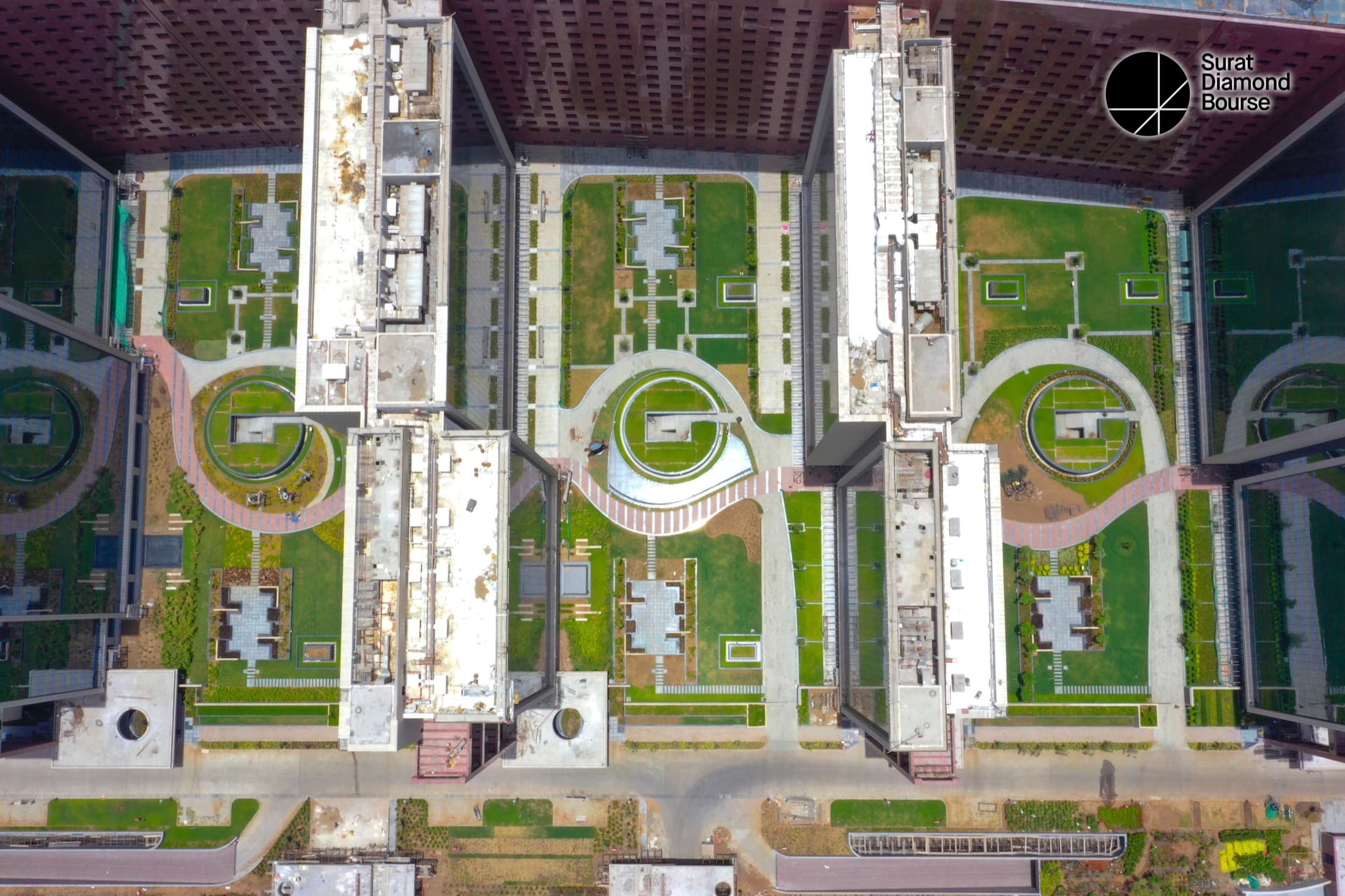
What connects all five: an estimated 90% of the world's diamonds are cut and polished in one place — Surat, India. Every other major hub sits somewhere downstream of that origin point.
Why this gap persists
Trading hubs endure because they provide real value: liquidity, certification infrastructure, financing, and proximity to end markets. None of that requires manufacturing capacity, and relocating a certification or finance ecosystem is a different (and much slower) undertaking than relocating cutting capacity was. So the split holds — trading concentrated in multiple global cities, manufacturing concentrated overwhelmingly in one.
For most of the industry's history, that split simply defined how buyers had to operate: source through whichever trading hub was closest to home. Direct access to Surat's manufacturing base required relationships, language, and logistics that weren't practically available to most international buyers.
What's different now
That's the gap a hosted buyer-visit model closes. Instead of sourcing through a hub several steps removed from the manufacturing floor, buyers can now travel directly to Surat, meet manufacturers matched to their buying category, and transact at the source — with the on-site customs and export support to make it practical.
We've written a dedicated breakdown for each market: what changes for buyers currently sourcing through Mumbai, Hong Kong, Dubai, Antwerp, and New York.
The takeaway
Trading hubs aren't going away, and for many buyers they'll remain part of a diversified sourcing strategy. But for buyers willing to make the trip, going to the actual source — rather than the nearest place stones happen to change hands — is now a practical option, not just a theoretical one. Read more about why Surat holds this position, or plan a hosted visit to see it firsthand.